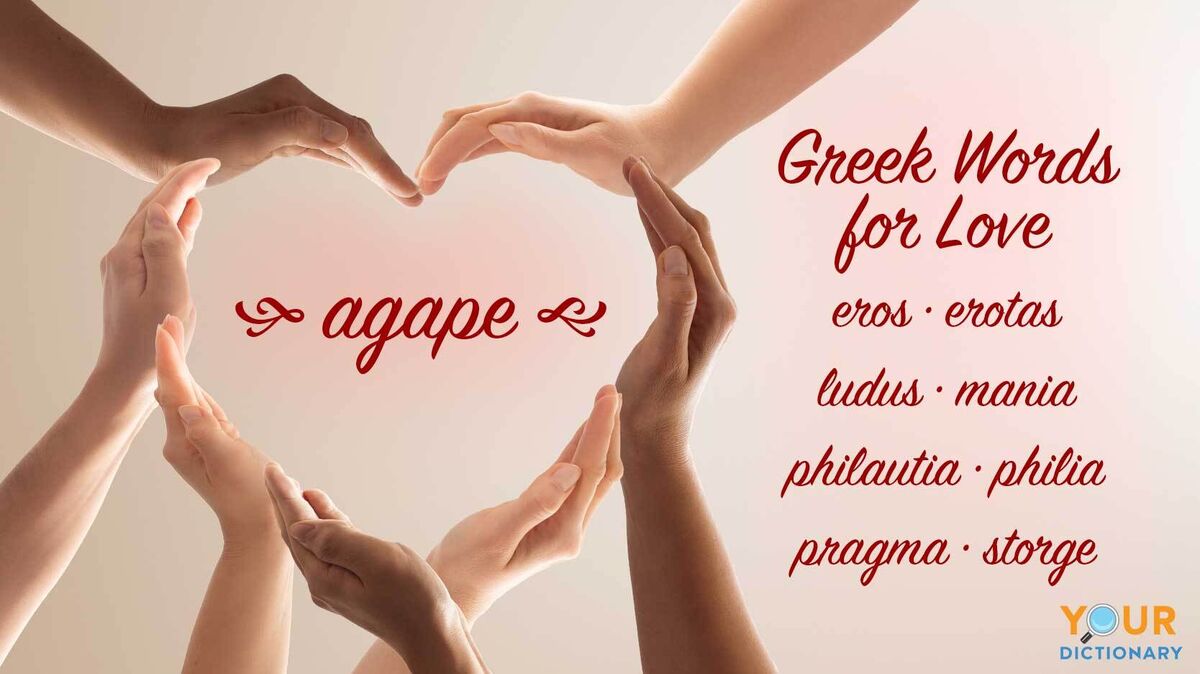
Greek (Modern Greek: ελληνικά, romanized: elliniká [eliniˈka] ⓘ; Ancient Greek: ἑλληνική, romanized: hellēnikḗ [helːɛːnikɛ́ː]) is an Indo-European language, constituting an independent … Learn about the different types and concepts of love in ancient Greek philosophy, such as agape, eros, philia, storge, philautia, and xenia. See definitions, examples, and references from various sources. · Greek language, Indo-European language spoken primarily in Greece. It has a long and well-documented history—the longest of any Indo-European language—spanning 34 … Today the Greek alphabet is used only to write Greek, however at various times in the past it has been used to write such languages as Lydian, Phrygian, Thracian, Gaulish, Hebrew, Arabic, Old … The Greek language, known as “Ελληνικά” (Elliniká) in Greek, stands as one of the world’s oldest recorded living languages. With a history spanning over 3,400 years, Greek has a rich legacy in … Learn how to speak Greek with lessons, audio and video, including the alphabet, phrases, vocabulary, pronunciation, grammar, activities and tests. The bulk of Greek vocabulary evolved from Proto-Greek, the ancestor of all Greek dialects. Modern Greek has also borrowed words from other languages such as French, German, and most … Today, Greek is spoken as a mother language by roughly 12 million people, most of them in Greece and Cyprus. It is also the mother language of natives in Albania, Bulgaria, FYROM, Italy and Turkey. Here is a brief history of the Greek language to help us understand its changes and its evolution. Modern Greek is a descendant of the Ancient language and is affiliated to the part of the Greek … · Keep reading to dive into all 8 Greek types of love, along with meanings, associations, and examples for each. You’ll also discover the 4 Greekwordsforlove used in the Bible, as well as how to say “I love you” in Greek. The first kind of love the Greeks defined was eros, named after the Greek god of carnal love and fertility. It represents sexual passion and desire and is the root of the word "erotic." Today, we associate this feeling with falling in love, as something exhilarating and exciting, but this wasn’t so for the ancient Greeks. For them, eros was a terri...See full list on parade.comThe second kind of love was philia, an affectionate love or deep friendship. In ancient Greek society, this was valued far greater than eros as it was considered love of equal terms—and one without the trappings of sexual attraction. Born from an appreciation of one another, philia is a kind of love that endures within long-standing friendships and...See full list on parade.comWhile the thought of eros sent the ancient Greeks into a frenzied hysteria, ludus was rooted in fun and came entirely without a sense of obligation. Ludus could mean the playful love between children, but it was more often termed as the flirtation between casual lovers—it represents the excitement of the early stages of a relationship. When you sit...See full list on parade.comAs an empathetic love that is extended to everyone—family, friends and strangers alike—agape is a selfless love that, today, is seldom offered as frequently as it should. Translated into Latin as caritas and forming the root of the word charity, agape is a pay-it-forward approach to love, where you show a universal kindness to others and understand...See full list on parade.comAlthough there is little evidence to suggest that the ancient Greeks frequently used pragma to define love, it became popular in the 20th century to describe healthy, long-term relationships. A deep connection between two friends or lovers, pragma is a mature and realistic love that stems from the deep understanding and unique harmony of fated soul...See full list on parade.comAristotle wrote, “All friendly feelings for others are an extension of a man’s feelings for himself.” He was not alone in those sentiments. The ancient Greeks classed philautia as one of the most important kinds of love because they recognized that you cannot share what you do not have. Without love for yourself, you cannot begin to extend feelings...See full list on parade.comStorge is the primal, protective love we all feel for family members and for those friends we also feel philia love. This kind of love is rooted in kinship and allegiance. It’s the unspoken bond between two people that transcends both friendship and sexual attraction because it is driven by familiarity, belonging and dependency. Storge may appear a...See full list on parade.comAs its name suggests, feelings of mania evoke madness. This version of Greek love usually stems from uncontrollable eros and a lack of healthy philautia. Mania violently attacks its subjects from within and pushes them toward stalking behaviors and codependency; it can also incite extreme jealousy. This kind of love isn’t to be encouraged, and if y...See full list on parade.comLearn how the Ancient Greeks defined different kinds of love, from sexual passion to self-love, and how to apply them to your relationships. Discover the origins, examples and nuances of eros, philia, ludus, agape, pragma, philautia, storge and mania.See full list on parade.comMar 28, 2024 · Greek philosophers attempted to explain love rationally and often categorized the different kinds of love people could feel. Because we love them so much, we brought together some Greekwords—and a Latin one, for good measure—for the different kinds of love you might find out there. · Now, of these eight words for love, only six were present in the culture, or at least the literature, of Ancient Greece: eros, philia, storge, agape, philautia, and xenia. How do you Write Love in Greek?«Αγάπη» is the most general term used to express love in Greek and it usually refers to the highest form of love. The romantic feelings you develop for someone before being able to say whether you love them or not are described as «έρωτας» in Greek. It is associated with Έρως, the Greek version of cupid.What does love mean in Greek?ρως érōs) means " love, mostly of the sexual passion." The Modern Greek word "erotas" means "intimate love ". Plato does not talk of physical attraction as a necessary part of love, hence the use of the word platonic to mean, "without physical attraction".What are the different forms of Love in Greek?love symbol, but it’s the brain that generates chemical signals to make people understand love. There are different forms and styles of expressing love. To describe these styles, the Ancient Greeks came up with four terms (eros, storge, agape and philia) to symbolize the four types of love. A successful marriage needs to exhibit all four of these loves. · Whether you’re confessing your love, expressing admiration, or simply letting someone know how much they mean to you, these 25 Greek phrases will help you convey your feelings in the most heartfelt way. · Greek philosophers attempted to explain love rationally and often categorized the different kinds of love people could feel. Because we love them so much, we brought together some Greekwords—and a Latin one, for good measure—for the different kinds of love you might find out there. · Now, of these eight words for love, only six were present in the culture, or at least the literature, of Ancient Greece: eros, philia, storge, agape, philautia, and xenia. · Whether you’re confessing your love, expressing admiration, or simply letting someone know how much they mean to you, these 25 Greek phrases will help you convey your feelings in the most heartfelt way. · Tutored in his youth by Plato's great student Aristotle, Alexander would spread the ideals of Greek civilization through his conquests and, in so doing, transmitted Greek art, …