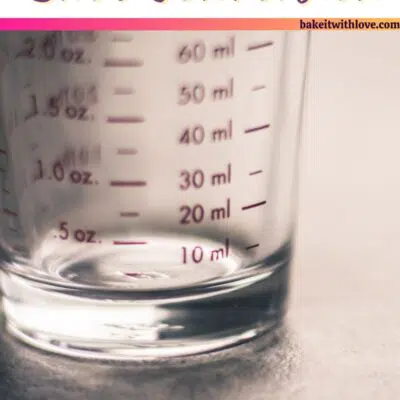
A standard shot in the United States contains 1.5 ounces of liquid, but shot sizes vary significantly worldwide and even within different establishments. This guide breaks down everything you need to know about shot measurements, regulations, and practical applications. The exact number of ounces in a shot depends on the size of your shot glass. They range from 1 to 2 ounces, but most shot glasses hold between 1.25 and 1.5 ounces. The most common size of a shot in the US is 1.5 ounces. For the rest of the world, the numbers are different. In Germany, a single shot will get you 0.67 ounces, in Australia 1 ounce, an...See full list on cocktail-society.comIn general, a double shot contains exactly 3 ounces of liquor. That's because double shots are typically asked for in cocktails and refer to jigger shots. Some dodgy bars sell double shots with 2 ounces, explaining that this is double of one ounce.See full list on cocktail-society.comTaking measurements of cocktail ingredients with a shot glass can be problematic and you should only use glasses you know. If you know that your glass holds 1 or 1.5 ounces, it can be a great tool. If you don't know, it can ruin your drink. It is a common misconception that all shot glasses are standardized to hold 1 oz of liquid. In fact, similar ...See full list on cocktail-society.comTo answer this, you need to convert oz into ml. 1 oz is approximately 30ml. So 1.5 oz of liquor is about 45ml (to be precise, it's 44ml, but 45ml is easier to memorize), and 2 oz equals 60ml. Here's a tool that helps convertingthese amounts. The same goes for cl: 1 cl is 10ml, so 1 oz equals 3 cl, 1.5 oz equals 4.5cl, and 2 oz equals 6cl. Once you ...See full list on cocktail-society.comThe shot sizes vary a lot depending on where you order it. Every country in the world seems to have its own shot size standards. You don't have to travel far to notice that a shot isn't always what you expect it to be. Check out the graphic below to see how many ounces you get per shot around the world.See full list on cocktail-society.comBefore mixology became my passion, I assumed a shot would be a fixed international standard and didn't consider the possibility that it could be different in other places. Maybe you did, too? So, the next time you have a shot at a new place, you know what you will get. -At least at the first one. After the fourth, things get blurry anyway.See full list on cocktail-society.comLearn how manyounces, ml, and cl are in a shot, and how they vary by country and region. Find out the difference between a shot, a double shot, and a jigger, and how to measure liquor with a shot glass.See full list on cocktail-society.comMar 3, 2025 · Most shot glasses hold around 1.25 oz. to 1.5 oz., but there is no official standard size for a shot. Some shot glasses can be less than an ounce and others can be over 3 ounces, with the most common size being 1.5 oz. How many ounces in a shot glass?In the United States, the official definition of how many ounces in a shot glass is 1.5 ounces, which is the most commonly used shot size in bars and restaurants across the country. However, shot sizes may vary across different regions and countries, with some countries using a smaller or larger standard shot size.How many ounces in a double shot?A double shot usually contains 3 to 4 ounces of liquor. Since there is no standard size for a shot glass, there is also no standard measurement for a double shot. More American bars would consider a shot to be 1.5 oz., making a double shot 3 oz. How Many Tablespoons in a Shot?How many ounces are in a shot?Whether you're mixing cocktails at home, working behind a bar, or simply curious about alcohol measurements, understanding shot sizes is essential. A standard shot in the United States contains 1.5 ounces of liquid, but shot sizes vary significantly worldwide and even within different establishments.What is a standard shot size?A standard shot in the United States contains 1.5 ounces of liquid, but shot sizes vary significantly worldwide and even within different establishments. This guide breaks down everything you need to know about shot measurements, regulations, and practical applications. The standard U.S. shot size is 1.5 ounces, though measurements vary worldwide. · In the United States, a standard shot is considered 1.5 ounces. While the U.S. doesn’t have a unified standard for shot glass sizes, Utah has set a unique precedent by officially defining the shot size at 1.5 ounces. · In the United States, the official definition of how many ounces in a shot glass is 1.5 ounces, which is the most commonly used shot size in bars and restaurants across the country. A standard shot typically contains 1.5 fluid ounces, but variations exist based on location and context. A “shot” is a common term used in bars and restaurants to describe a small serving of liquor, often consumed quickly. But exactly how many ounces are in a shot? · In the United States, a typical shot is generally considered to be 1.5 ounces (44 milliliters) of liquor, which is the standard pour in most bars and restaurants. · Most shot glasses hold around 1.25 oz. to 1.5 oz., but there is no official standard size for a shot. Some shot glasses can be less than an ounce and others can be over 3 ounces, with the most common size being 1.5 oz. · In the United States, a standard shot is considered 1.5 ounces. While the U.S. doesn’t have a unified standard for shot glass sizes, Utah has set a unique precedent by officially defining the shot size at 1.5 ounces. · In the United States, the official definition of how many ounces in a shot glass is 1.5 ounces, which is the most commonly used shot size in bars and restaurants across the country. A standard shot typically contains 1.5 fluid ounces, but variations exist based on location and context. A “shot” is a common term used in bars and restaurants to describe a small serving of liquor, often consumed quickly. But exactly how many ounces are in a shot? · In the United States, a typical shot is generally considered to be 1.5 ounces (44 milliliters) of liquor, which is the standard pour in most bars and restaurants.