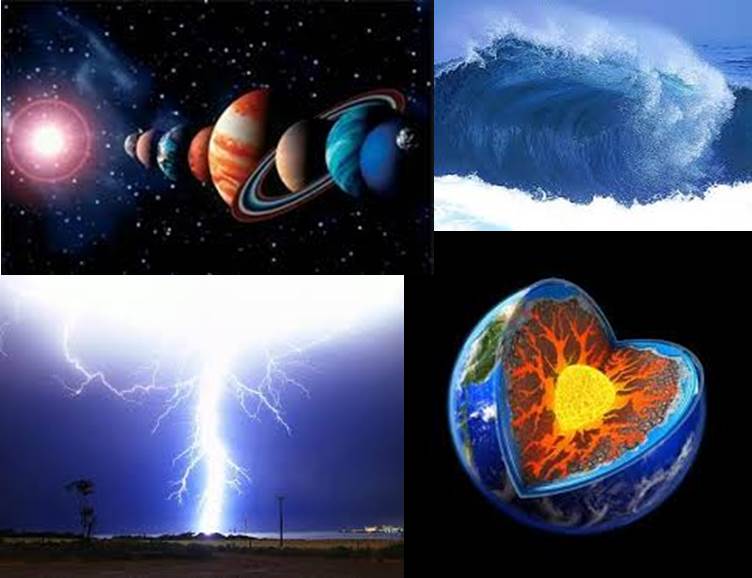
Physical science is a branch of natural science that studies non-living systems, in contrast to life science. It in turn has many branches, each referred to as a "physical science", together is called the "physical sciences". Physical science is the study of the inorganic world. That is, it does not study living things. (Those are studied in biological, or life, science.) The four main branches of physical science are astronomy, physics, chemistry, and the Earth sciences, which include meteorology and geology. · Physical science is a fundamental branch of natural science dedicated to the systematic study of inorganic systems. It encompasses the principles governing matter, energy, and their interactions, ranging from the subatomic realm to the cosmic scale. · Physical science is the branch of natural science that studies non-living systems, as opposed to biological sciences, which focus on living organisms. It primarily investigates the nature and properties of energy and matter. · The meaning of PHYSICAL SCIENCE is any of the natural sciences (such as physics, chemistry, and astronomy) that deal primarily with nonliving materials. Physical science is the study of the non-living world around us. It focuses on matter (everything that has mass and takes up space) and energy (the ability to do work or cause change). Physical science is divided into two main branches: physics (the study of motion, forces, and energy) and chemistry (the study of substances and how they change). Physical Science is the branch of natural science that studies non-living systems and natural phenomena. Unlike life sciences (like biology), it focuses on the principles governing the inorganic world.