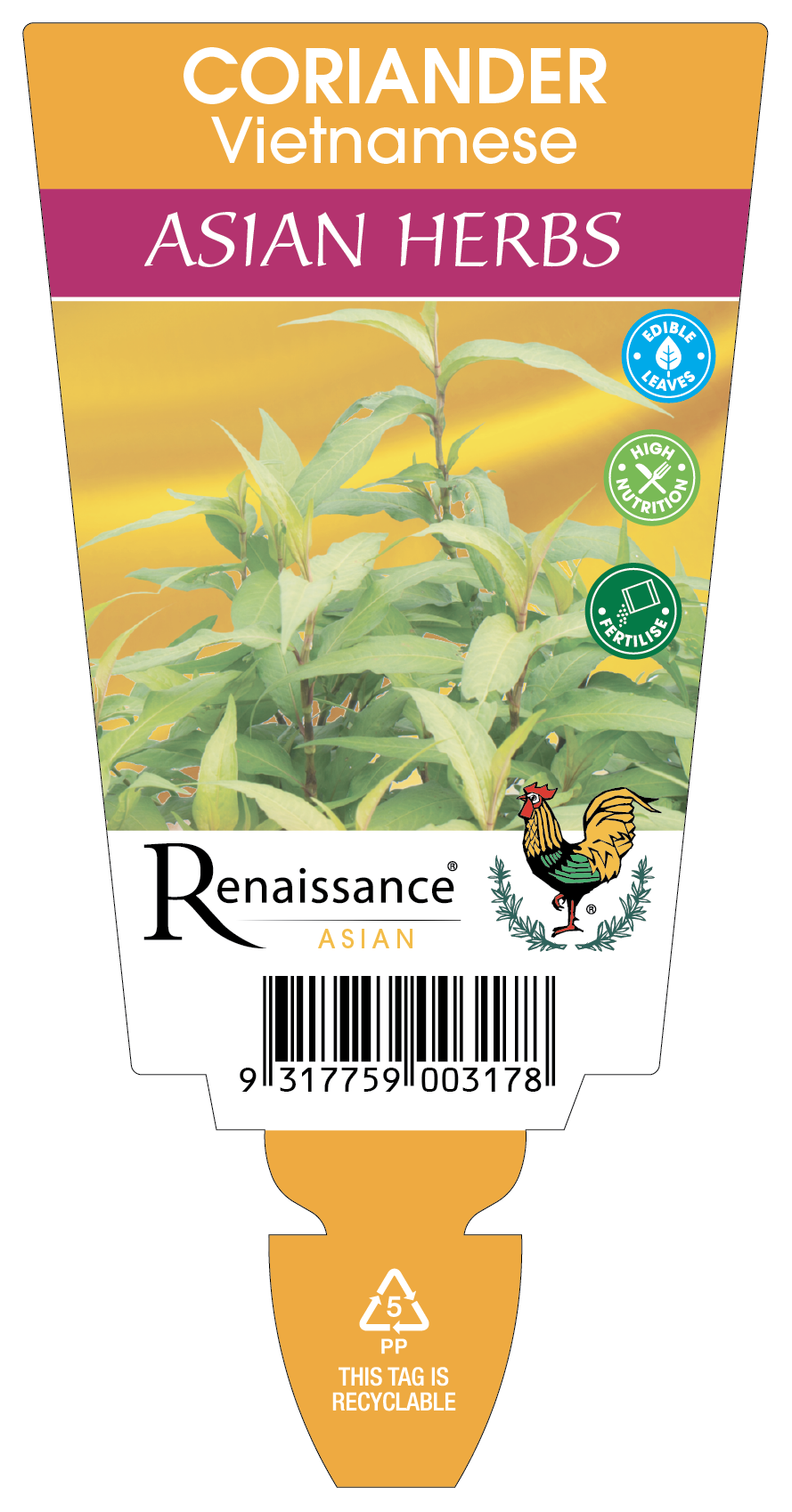
Persicaria odorata is a species of flowering plant in the knotweed family, Polygonaceae. [1][3] It is sometimes referred to by the common names Vietnamesecoriander, rau răm (from Vietnamese), laksa leaf (calque from Malay daun laksa), [4] Vietnamese cilantro, phak phai (from Thai: ผักแพว), praew leaf, hot mint, Cambodian mint[5] and Vietnamese mint, [6] is an herb whose leaves ... Vietnamesecoriander is a familiar herb in Vietnam, often used to add a bright, herbal note to some traditional dishes. In this article, we’ll explore its characteristics, how it’s grown, and the flavorful ways it enhances Vietnamese cuisine. · Vietnamesecoriander is a beloved herb in Vietnamese cuisine, often used to enhance flavors and neutralize odors in dishes with strong-smelling ingredients like seafood, balut, or goat meat. Vietnamesecoriander is common in Vietnamese and Southeast Asian cuisine. It is also known as Vietnamese cilantro, hot mint, or laksa leaf. In Vietnam they call it ‘Rau Răm’ and in Malaysia and Singapore, it is called ‘kesum leaf’. In Singapore, it is a key ingredient in laksa, a spicy noodle soup with fish or chicken.See full list on epicgardening.comAlthough Vietnamese cilantro is becoming more popular in home gardens, it may be difficult to find at your local plant nursery. Luckily, live plants are available from a few online vendors. Searching for this herb’s alternative names could be helpful when researching where to purchase them online. You may have to use all the common names including ...See full list on epicgardening.comThis herb is easy to grow but has some important requirements for both heat and water. This will ensure a healthy plant that produces lots of lovely leaves for the kitchen.See full list on epicgardening.comVietnamese cilantro is easy to propagate by rooting fresh stems in water and transplanting. In cooler climates, pot young plants and leave them outside in warmer months, bringing them indoors before temperatures hit freezing. To propagate, use clean, sharp garden shears or scissors to cut a thick, healthy stem (about six inches) from the plant. The...See full list on epicgardening.comHarvest Vietnamese coriander when leaves are fully formed but still tender. For a continual harvest and to promote fresh, dense growth, pinch the growing tip of each shoot as you harvest. The younger leaves are the tastiest.See full list on epicgardening.comVietnamese coriander has a couple of requirements that are non-negotiable: moisture and heat. The good news is that both of these needs can be met in most growing areas, even if you need to bring pots inside when it gets colder.See full list on epicgardening.comMay 21, 2025 · VietnameseCoriander (Persicaria odorata) could be the perfect new addition. This distinctive herb, also widely known as Rau Răm or Laksa Leaf, is a culinary staple in Southeast Asian cooking, celebrated for its bold, peppery flavour and wonderfully fragrant leaves. View allVietnamesecoriander (Persicaria odorata) is widely used in Southeast Asian cuisines. The taste is described as a lemony cilantro or spicy mint. It is most closely associated with Vietnamese cooking where it is known as rau ram. The leaves are used raw in salads, and cooked in soups and stews. · VietnameseCoriander, often called Vietnamese mint or Persicaria odorata, is a fantastic herb you might not have tried yet. Native to Southeast Asia, it’s a go-to ingredient in dishes from countries like Vietnam, Malaysia, Thailand, and Laos. · VietnameseCoriander (Persicaria odorata) could be the perfect new addition. This distinctive herb, also widely known as Rau Răm or Laksa Leaf, is a culinary staple in Southeast Asian cooking, celebrated for its bold, peppery flavour and wonderfully fragrant leaves. View allVietnamesecoriander (Persicaria odorata) is widely used in Southeast Asian cuisines. The taste is described as a lemony cilantro or spicy mint. It is most closely associated with Vietnamese cooking where it is known as rau ram. The leaves are used raw in salads, and cooked in soups and stews. · VietnameseCoriander, often called Vietnamese mint or Persicaria odorata, is a fantastic herb you might not have tried yet. Native to Southeast Asia, it’s a go-to ingredient in dishes from countries like Vietnam, Malaysia, Thailand, and Laos. Vietnamesecoriander (Persicaria odorata) is widely used in Southeast Asian cuisines. The taste is described as a lemony cilantro or spicy mint. It is most closely associated with Vietnamese cooking where it is known as rau ram. The leaves are used raw in salads, and cooked in soups and stews. · VietnameseCoriander, often called Vietnamese mint or Persicaria odorata, is a fantastic herb you might not have tried yet. Native to Southeast Asia, it’s a go-to ingredient in dishes from countries like Vietnam, Malaysia, Thailand, and Laos. VietnameseCoriander - Advice From The Herb Lady. An informative Pinterest pin featuring Vietnamesecoriander and text detailing its nutrition, benefits, and usage tips. The Vietnamese use herbs in abundance. They don’t just sprinkle a little on here and there, they use it like salad leaves and they love their herbs. The general term for herbs is “rau th?m” meaning, fragrant leaves. Assorted VietnameseHerbs | runawayrice.com. Vietnameseherbs add such wonderful aroma, flavor and color to foods that it’s no wonder they’re such integral ingredients in the cuisine. Without the inclusion of certain herbs, a dish could be rendered completely lacking and unappetizing. Vietnamesecoriander, scientifically known as Persicaria odorata or Polygonum odoratum, is a versatile and aromatic herb that adds a unique flavor to Southeast Asian cuisine. Vietnamesecoriander, also known as Rau Răm in Vietnamese cuisine, is a perennial herb from the Polygonaceae family. It is native to Southeast Asia, where it thrives in tropical and subtropical climates. The leaves of VietnameseCoriander are widely used in Southeast Asian dishes for their spicy coriander-like flavour. This is an attractive, aromatic herb that has upright, purple-tinted stems and pointed deep green leaves with purple patterning. Rau Răm (VietnameseCoriander/Vietnamese mint). Vietnamesecoriander has long, thin, pointy leaves with smooth (non-serrated) edges. The leaves often feature a distinctive dark marking in the center, making them easy to recognize (see picture below). Grow your own fresh culinary VietnameseCoriander in your kitchen or herb garden. Ideal for fresh herbs. Buy now - Free UK Delivery!Reddish-purple stems produce long green leaves with a striking burgundy V-shape pattern. Popular in South East Asian cuisine, particularly in Vietnam. Striking in appearance with a punchy tasty flavour VietnameseCoriander is a popular herb in Asian cooking. It’s very punchy in flavour and has quite a striking look; the top of the leaf is dark green, with chestnut-coloured spots, and the bottom of the leaf is burgundy red. Vietnamesecoriander, or Vietnamese cilantro, is a heat-loving perennial with slightly spicy, flavorful leaves that are a great culinary substitute for cilantro or mint. If papalo herb isn’t your thing, this may be the cilantro alternative for you! In Singapore, Vietnamesecoriander is known as laksa plant (also laksa herb or laksa leaves); in Singaporean Cantonese, there is the equivalent name laksa yip [喇沙葉]. These names reflects the usage of Vietnamesecoriander for the Chinese-Malaysian noodle curry laksa...