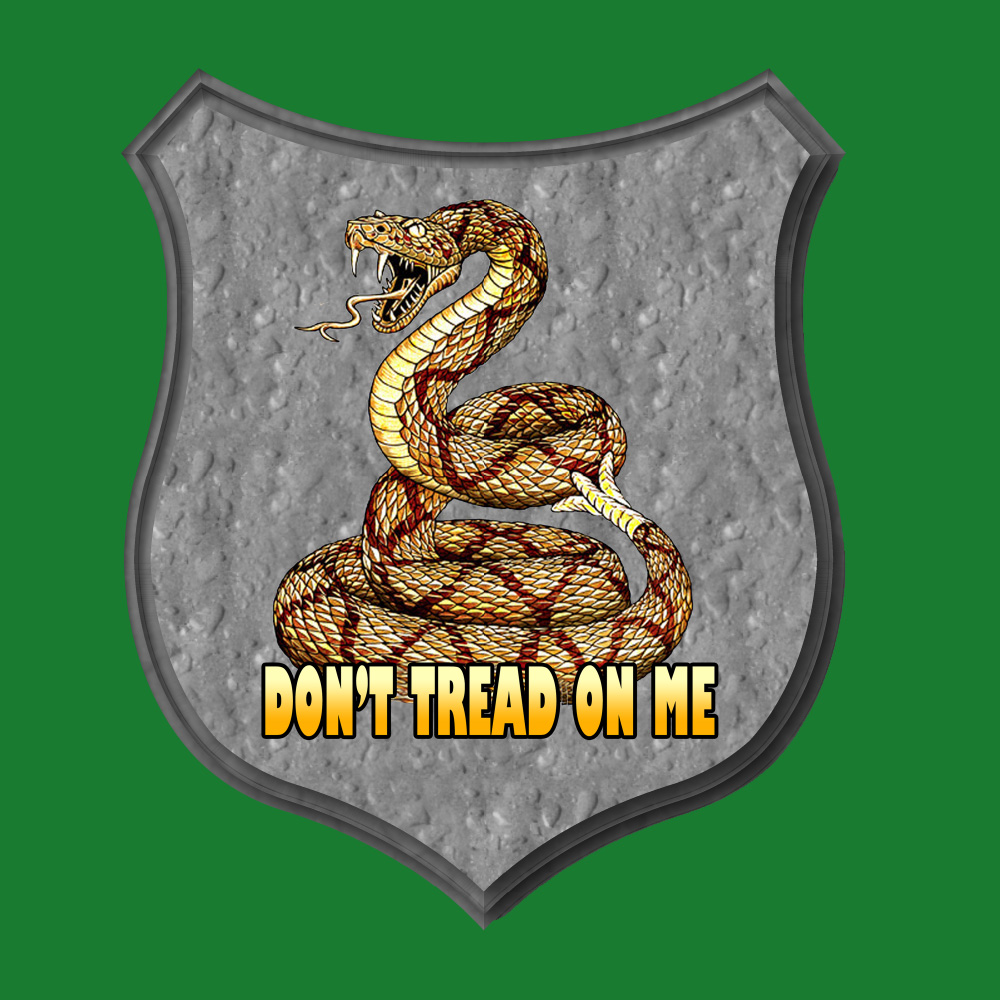
Don't Tread on Me, usually stylized fully in uppercase letters without an apostrophe (DONTTREAD ON ME), is a political slogan dating to the American Revolution. It is an alternative English translation to the Latin phrase Noli me tangere. · Learn the history and meaning of the phrase "Don't tread on me" and the Gadsden flag, a symbol of American independence and defiance. Explore how the flag and the phrase have been used and misused over time, and what they mean today. · The phrase “Don’t Tread on Me” conveys a warning against aggression and infringement upon rights. It signifies a willingness to defend liberties when provoked, rather than initiating conflict. · What does don’t tread on me mean? Originating as a motto on an iconic Revolutionary War flag, don’t tread on me is a historic expression of American patriotism. Today, it may be used as a more general expression of personal freedom and individualism. Gadsden flag, historical flag used by Commodore Esek Hopkins, the United States’ first naval commander in chief, as his personal ensign during the American Revolution (1775–83). The flag features a coiled rattlesnake above the words “Don’t Tread on Me” on a yellow background. · Proudly flown from vehicles or defiantly waved at political rallies, the yellow "Don't Tread on Me" flag — with its fearsome coiled rattlesnake — has become a rallying cry for right-wing America. · The phrase “Don’t Tread on Me” is a warning or statement of assertiveness, indicating that the speaker will not tolerate aggression, oppression, or disrespect.