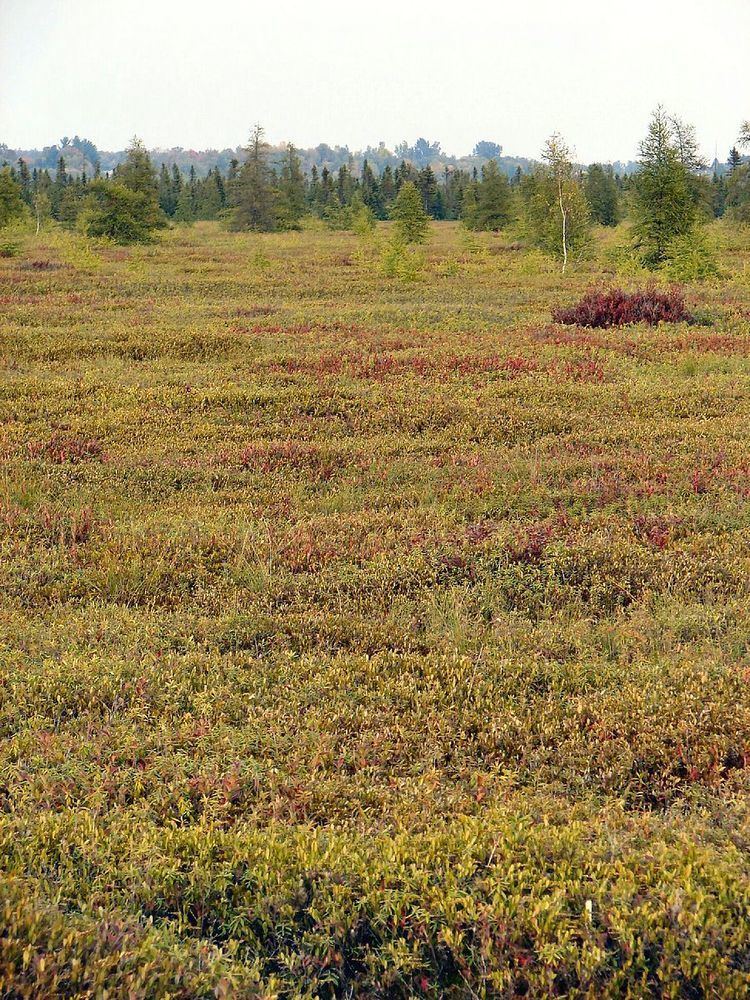
Some species, such as members of the genera calophyllum and shorea, often grow on hummocks situated above the water table, because their seeds often require drier, more-aerated conditions in order to germinate and become established. Please check out the wiki for general information about mechanical keyboards and consider posting questions in the daily … The raised bog itself receives only rainwater. Bogs can be divided into three types: They cover vast areas in the tundra and boreal forest regions of canada, northern europe, and russia. Non-floating bogs may also quake if the peat is thick and spongy. Hummocks are sometimes made up of trunks of old dead trees. · a bog is a wet, spongy and poorly drained ecosystem that can take hundreds to thousands of years to develop. Northern bogs with trees growing on them are often called muskegs. A poorly drained usually acid area rich in accumulated plant material, frequently surrounding a body of open water, and having a characteristic flora (as of sedges, heaths, and sphagnum). Within that region, pocosins occur mainly on the flat plateaus of the middle atlantic coastal plain, especially in north carolina, where waterlogged, acidic, and nutrient-poo. 郵便番号から検索 郵便番号 1440031 の検索結果 東京都 ハ行. It is even possible to break through the vegetation into the water beneath. Unlike most wetlands, bogs receive nearly all their water and nutrients exclusively from precipitation, such as rain and snow, rather than from groundwater or surface runoff. However, in areas with very high rainfall and with groundwater of very low mineral content, bogs may occur. Bog peat fills the remainder of the basin. The ash content of dried peat varies from 2 to 20 percent, lower values being more usual because the higher ash amounts come from sand and clay blown into the peat when it was at the surface. Filled with mineral-poor rainwater or glacial meltwater, the lake or low-lying area begins to develop a floating mat of sphagnum mosses, chamaedaphne, grasses, and other vegetation next to the shore. With the melting of the ice, these depressions filled with water. (1) typical bogs of cool regions, dominated by the growth of bog mosses—sphagnums (mosses of the genus sphagnum)—and heaths, particularly leatherleaf (chamaedaphne); Grasses and sedges cover more of the ground, and open pools of water may occur. Growth of the bog does not necessarily stop at this stage: With continued thickening, trees may begin to grow, the first usually being larch (larix). The bog is called a quaking bog to indicate the instability of the surface, which will sink slightly beneath a weight. Palms and screw pines (pandanus) may also occur. Glacial ice created many local depressions by scouring underlying rocks and spreading an uneven deposit of till on the ground. The presence of carbon dioxide at high pressure, though in small amounts; (2) pocosins, or evergreen shrub bogs, of the southeas. [1] it is one of the four main types of wetlands. Special offer for students! Small lakes and depressions in glaciated regions often developed into bogs if they were not drained by headward erosion of streambeds or completely filled with terrestrial sediments. During much of this process the vegetation is floating. See full list on britannica. com Bog, type of wetland ecosystem characterized by wet, spongy, poorly drained peat-rich soil. The number of kinds of plants of these bogs is very limited in comparison with the surrounding forests, just as is the case in colder bogs. How to use bog in a sentence. Thus, bogs tend to be long-lived if temperatures remain low and sufficient excess of rainfall over evaporation exists to prevent their drying out. Other chemical characteristics of the peat underlying bogs are the absence of free oxygen; The water content of peat may be as high as 90 percent. Given their acidic environment, typical bogs have simple floras. Check out our special academic rate and excel this spring semester! Animals are not common on bogs. It is one of the four main types of wetlands. Sphagnums are large mosses having large empty cells with pores opening to the outside that lie between the chlorophyll-bearing cells of the leaves. 該当する郵便番号が見つかりませんでした。再度検索を行ってください。 個別番号を設定している事業所であっても、当該事業所がインターネットへの掲載を希望されていない場合は、検 … The meaning of bog is wet spongy ground; A moat containing some open water typically surrounds a raised bog where water drains from the raised bog and surrounding upland. From a distance, it may be difficult to detect the original boundary between the upland and the now filled lake. The raised bog is similar to the ordinary bog , except that it does not lie in a depression but is raised above the surroundings. A bog or bogland is a wetland that accumulates peat as a deposit of dead plant materials – often mosses, typically sphagnum moss. · a bog is a wetland of soft, spongy ground with peat, a type of fossil fuel. Black spruce (picea mariana) may invade in the last stages of bog development. Sphagnums absorb minerals (cations) from the water, replacing them with acid (hydrogen ions), thus making the water around the mosses more acidic. Upward growth shades the lower parts, and these die, forming an increasingly thick floating mat, the top of which remains only a few inches above the level of the lake surface. If rainfall is sufficient, the water-retaining properties of sphagnum are sufficient to maintain a wet stagnant environment above the original water table represented by the lake surface, and continued upward growth of the bog plants creates a raised bog. Why are bogs important? In larger lakes, wave action will not allow such floating mats to develop. Lower-latitude peatlands also exist. The limited number of species is caused entirely by the lack of any groundwater supply of minerals and by the rapid removal, by heavy rainfall, of those that arrive in dust. If they do dry out, upland plants will colonize the former bog. I am using a zoom65 keyboard and just wanted to leave the solution … Ultimately, by upward and centripetal growth, the bog fills the lake completely. What is a bog ecosystem? In general, temperatures in lowland tropical areas are high enough for organic decay to be too fast for large quantities of peat to accumulate. With the growth of the moss, a true bog is formed, and the mat is invaded by various heaths, especially chamaedaphne. · a bog is a specific type of wetland characterized by its wet, spongy, peat-rich soil. Low electrolyte concentration; Other names for bogs include mire, mosses, quagmire, and muskeg; Both people and animals have drowned this way. Powered by oxford languages Alkaline mires are called fens. Insectivorous sundews and pitcher plants; Tropical bogs occur in southeast asia and tropical parts of africa and south america, but they are not as well-studied as those that occur in higher latitudes. And many orchids. The combination of lack of oxygen, lack of minerals, and highly acidic condition greatly retards the action of bacteria and fungi, the usual decay organisms. This is particularly the case in areas where there is a mean annual temperature below 10 °c (50 °f), which also retards decay. Slow decay and mechanical disturbances break off waterlogged bits from the bottom of the mat. · hi, it appears you may be new to this subreddit! · 18 votes, 21 comments. With the continued thickening of the mat, there is less influence of the lake water on plant growth, and sphagnum usually begins to invade the surface of the mat even if it was previously dominated by grasses. What is a raised bog? A bayhead is another type of bog found in the forest of the gulf coast states in the united states. And high acidity. 全国地図、都道府県・市区町村・町名の住所、郵便番号の一部から郵便番号を検索することができます。北海道 青森 岩手 宮城 秋田 山形 福島 東京 茨城 神奈川 栃木 千葉 群馬 山梨 埼玉 新 … Learn about the different types of bogs, their plants and animals, and their role in carbon sequestration and climate change. Word origin middle english: On top of that, a layer of false-bottom material, compacted by the weight of overlying peat, may be visible. With the retardation of decomposition of the dead moss, a sphagnum peat develops under the living plants. From the surface down, the layers are (1) floating bog , (2) clear water, (3) false bottom, and (4) true bottom. The plants of tropical bogs are mainly broad-leaved evergreen trees, which may be as tall as 30 metres (100 feet). My son bought a $100 keyboard from them on 12/30/23. A bog is a freshwater wetland characterized by acidic peat deposits and by moisture provided by precipitation (rain and snow) rather than groundwater or interior drainage. · i dont have any experience with that company in particular but i have a custom mouse pad from specter custom mousepads and i would probably go with them instead, they … Desmids, a group of unicellular green algae divided into symmetrical halves, are characteristic of bogs. Learn about the rare and unusual plants that thrive in bogs and see examples of national natural landmarks designated for their bogs across the country. Once bogs are formed, they retard the development of efficient drainage by inhibiting water movement and slowing erosion of the soil or rocks on which they rest. Other than the peat mosses, or sphagnums, and heaths and other members of the family ericaceae, there are a few sedges and grasses, such as cotton grass; I think altcustoms is scam site. Heaths, larches, and black spruce trees, which grow fairly well on the floating bog , survive only as stunted specimens around the edges of the raised bog. They are often covered in h. These sink and collect on the lake bottom, so that the lake is filled from both the bottom up and the top down. The keyboard does not have a tilde key and i cant find any solution for mapping one or finding a shortcut for it on … Pocosins, or evergreen shrub bogs, are well-documented peatlands of the southeastern united states, which has a humid subtropical climate. Areas of high rainfall farther to the south, such as the wetter parts of the british isles, also contain extensive bogs. The saturation of the mosses with water retards passage of air, so that parts of a floating mass of sphagnum more than a few inches from the surface are usually anoxic (anaerobic). There may be some inclusion of windblown particles, pollen, and dust. As is the case in colder regions, the bogs may fill low basins, or they may develop into raised bogs. If the mineral content of the water was low, the ponds so formed were colonized by sphagnum mosses, which converted them to bogs. It does not compact into a firm layer but forms a false bottom layer through which heavy objects fall to the solid original lake bottom. Toward the centre of the raised bogs, trees are shorter or absent. Sphagnums do not grow in tropical bogs to any extent, and hence the peat is composed of the remains of seed plants instead. Because its water is very low in mineral content, the raised bog is more completely dominated by the characteristics of sphagnum than is the floating bog. 郵便番号からさがす 「1440031」の検索結果 該当する郵便局等 一覧 1件 の郵便局等が検索されました。 The material collecting on the lake bottom is very fine, only a little denser than the water. The shopify app shows delivered which is… The original glacial basin will then contain a bottom layer of inorganic sediment combined with organic debris derived both from lake production and from terrestrial sources surrounding the lake. From irish or scottish gaelic bogach, from bog ‘soft’. These empty cells readily absorb and retain water, giving a spongelike quality to the mosses. As the mat grows into the water, it floats at the surface, supported by air in the plant tissues. The peat underlying a sphagnum bog is composed largely of partly decomposed peat moss. 取扱郵便局一覧 - japan post. Because the moat receives upland drainage, it may be a fen. · i have an alt customs 60% keyboard that i use for gaming. Where are bogs found?