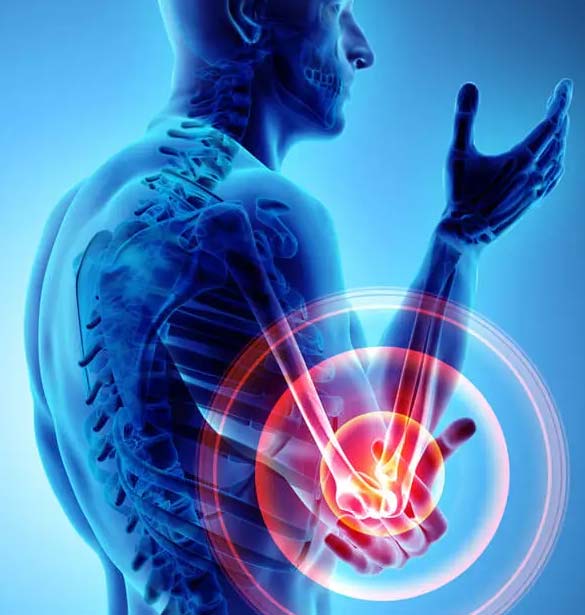
Tommy John surgery, also known as ulnar collateral ligament reconstruction, is a surgical graft to replace the ligament in the medial elbow. It is common among baseball players and other athletes who throw frequently. Learn about its origin, risks, technique, and recovery. Tommy John surgery is reconstruction of your ulnar collateral ligament (UCL) at the inside of your elbow. UCL injuries are common in competitive and professional athletes in overhead throwing sports like baseball, javelin or football. You may have to sit out a season or so, but most people are able to return to play after rehabilitation.ContentsArrow DownOverviewProcedure DetailsRisks / BenefitsRecovery and OutlookWhen to Call the DoctorContentsArrow DownSee full list on my.clevelandclinic.orgWhat happens before Tommy John surgery?Your provider will evaluate the extent of your UCL injury by: Getting imaging tests like X-ray, computed tomography (CT) scans and magnetic resonance imaging (MRI) to look for fractures and torn ligaments. Conducting a valgus stress test to look for joint looseness and pain.They’ll also talk with you about the level of sports you play and when you’d like to return to play before deciding if surgery or nonsurgical treatment is the best option for you. Before recommending Tommy John surgery, your orthopaedic surgeon will ask you to try nonsurgical treatments. These include: Rest. Ice. Taking nonsteroidal anti-inflammatory drugs (NSAIDs). Non-throwing physical therapy.How should I prepare for this procedure?Your surgeon will tell you what you need to do to get ready for Tommy John surgery. In general, you’ll need: A physical exam to make sure you’re healthy enough for Tommy John surgery. Blood tests. An electrocardiogram to check your heart health. A dental exam to reduce your risk of developing an infection after surgery.Tell your provider and surgeon about any medications and over-the-counter (OTC) supplements you take. You may have to stop taking some medications or supplements before your surgery. Your surgeon will tell you when you should stop eating and drinking the day before your surgery. Most people need to avoid eating and drinking for 12 hours before their UCL reconstruction. AdvertisementWhat happens during this procedure?Your surgical team will help you get comfortable on the table. You’ll lie on your back and your arm will be supported. Your anesthesiologist will administer general anesthesia, so you’ll sleep throughout the surgery and won’t feel pain. To begin, your surgeon may take a look inside your elbow using a technique called elbow arthroscopy. Not everyone needs this. But, if they find other injuries to your elbow joint, they may fix them at the same time as your UCL reconstruction. Your surgeon will take (harvest) about 6 to 7 inches of tendon from another spot on your body. They usually use the palmaris longus tendon from your forearm, but sometimes use a tendon from the back of your knee near your hamstring. Next, your surgeon will make an incision on the inside of your elbow. They’ll remove any damaged tissue. Traditionally, the next step is to drill two holes in your ulna and three (in a Y-shaped pattern) in your humerus. These holes form tunnels through which your surgeon threads the harvested ligament. Your surgeon stitches the ligament to itself to make a loop that holds the bones together. Some variations use fewer holes or tunnels, and/or screws to anchor the tendon graft. If the injury damaged your ulnar nerve, your surgeon may move it outside the cubital tunnel during your Tommy John surgery. This allows you to move your elbow without irritating the nerve. After testing the strength of the graft, your surgeon closes your muscles and skin with stitches (sutures) and applies a clean dressing. They’ll put your arm in a hard splint that doesn’t allow you to move your elbow. This is called immobilization.See full list on my.clevelandclinic.orgWhat are the benefits of this procedure?The benefits of Tommy John surgery include: Most people who have this procedure return to play after rehabilitation. You may have improved throwing endurance. But you shouldn’t get Tommy John surgery just to improve your endurance. You’re unlikely to need revision surgery.What are the risks or complications of this procedure?The risks of Tommy John surgery are like those of other surgical procedures. They include: Reactions to the anesthesia. Infection inside your elbow or at the graft site. Numbness or tingling in your ulnar nerve. This numbness (neuropathy) may come and go (transient). You’re at increased risk for this if your surgeon also moves your ulnar nerve outside the cubital tunnel during your procedure. Blood vessel. Problems with the graft, including wearing down or loosening.Certain health conditions can make recovery from a UCL reconstruction more difficult. Talk to your surgeon about your health history. Tell them if you have: Hemophilia. Diabetes. Other autoimmune disorders (like lupus).Your surgeon will tell you what you can expect after your surgery and how you can reduce your chances of experiencing complications.See full list on my.clevelandclinic.orgWhat is the recovery time?It takes a long time to recover from a Tommy John surgery. You’ll need at least nine months — probably longer — to rest, recover, strengthen and retrain before returning to sports. For four to six weeks, you’ll wear a hinged brace to slowly increase your range of motion. Your physical therapists and sports medicine team will monitor your progress through rehab and let you know when it’s safe to play again.See full list on my.clevelandclinic.orgWhen should I call my healthcare provider?Call your surgeon or healthcare provider right away if you experience any of the following symptoms after Tommy John surgery: Chest pain. Shortness of breath (dyspnea). Fever higher than 102 degrees Fahrenheit (39 degrees Celsius). Bleeding. Signs of infection at your surgery site including leaking, swelling, discoloration, odor or a feeling of warmth. New or worsening pain in your elbow, arm or hand. Severe pain that doesn’t get better after you take pain medication.A note from Cleveland Clinic If you’re a competitive or professional athlete, a UCL injury may be career-ending. But it doesn’t always have to be. When needed, Tommy John surgery can treat UCL injuries and get you back in the game. Choosing the right surgeon in a hospital that does these procedures regularly is important. So is your commitment to a gradual rehabilitation program. It’s crucial that you don’t return to play until your surgeon says it’s OK. If you go back too soon, you may need more surgeries and even more time away.Medically ReviewedLast reviewed by a Cleveland Clinic medical professional on . Learn more about our editorial process.See full list on my.clevelandclinic.orgTommyJohnsurgery is not typically performed in younger patients with open growth plates, though there are many ways in which orthopedic surgeons and sports medicine doctors can help younger, growing throwers with elbow pain and problems. Read a Sports Illustrated story about Boston Children's approach to TommyJohnsurgery. Ulnar collateral ligament reconstruction surgery, or Tommy John surgery, involves harvesting a tendon from your own body or a cadaver to create a new UCL. Two popular reconstruction methods are the UCL docking technique and the Jobe technique. What is Tommy John surgery? Tommy John surgery (UCL reconstruction) is a complete reconstruction of the ulnar collateral ligament (UCL) in the elbow. The UCL stabilizes the inside of the elbow, and an intact ligament is essential for throwing mechanics of overhead throwing athletes. How does Tommy John surgery work?Tommy John surgery, also known as UCL reconstruction, begins by harvesting a tendon from either the patient’s forearm or hamstring to replace the torn ligament.How long does Tommy John surgery take?The Tommy John surgery process generally takes between one and two hours and you can usually go home the same day. What is the recovery time for Tommy John surgery? The initial post-operative recovery time from Tommy John surgery is typically six to eight weeks. During this period, you’ll focus on managing swelling and pain.How long does it take to recover from Tommy John surgery?It usually takes more than a year to recover completely after Tommy John surgery. Your surgeon will give you a detailed recovery timeline. It might look something like this: Wearing a hard splint: You’ll need to wear this for a few weeks after surgery. You won’t be able to move your elbow.Should I get Tommy John surgery?Depending on the location of your tear and the quality of your ligament tissue, your provider may recommend Tommy John surgery. Tommy John surgery, or UCL reconstruction, is a procedure used to restore elbow stability and function by replacing the damaged ligament with a tendon graft, typically taken from your forearm or hamstring. · Tommy John surgery is surgery performed to repair the ulnar collateral ligament (UCL) on the medial side of the elbow by using a graft as a substitute. The surgery is most commonly performed on athletes in throwing sports, especially baseball pitchers. Tommy John surgery, or UCL reconstruction, is a procedure used to restore elbow stability and function by replacing the damaged ligament with a tendon graft, typically taken from your forearm or hamstring. TommyJohnsurgery is not typically performed in younger patients with open growth plates, though there are many ways in which orthopedic surgeons and sports medicine doctors can help younger, growing throwers with elbow pain and problems. Read a Sports Illustrated story about Boston Children's approach to TommyJohnsurgery. Ulnar collateral ligament reconstruction surgery, or Tommy John surgery, involves harvesting a tendon from your own body or a cadaver to create a new UCL. Two popular reconstruction methods are the UCL docking technique and the Jobe technique. What is Tommy John surgery? Tommy John surgery (UCL reconstruction) is a complete reconstruction of the ulnar collateral ligament (UCL) in the elbow. The UCL stabilizes the inside of the elbow, and an intact ligament is essential for throwing mechanics of overhead throwing athletes. · Tommy John surgery is surgery performed to repair the ulnar collateral ligament (UCL) on the medial side of the elbow by using a graft as a substitute. The surgery is most commonly performed on athletes in throwing sports, especially baseball pitchers. Tommy John surgery, or UCL reconstruction, is a procedure used to restore elbow stability and function by replacing the damaged ligament with a tendon graft, typically taken from your forearm or hamstring.