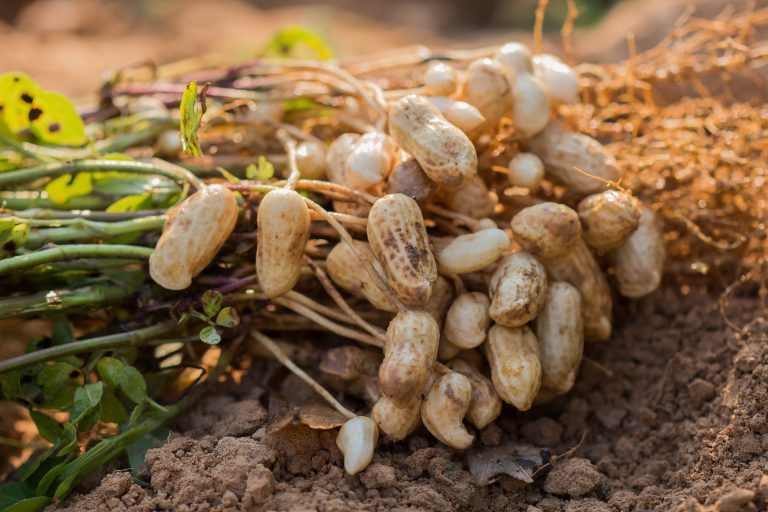
The peanut belongs to the botanical family Fabaceae (or Leguminosae), commonly known as the legume, bean, or pea family. [1] Like most other legumes, peanuts harbor symbiotic nitrogen-fixing bacteria in root nodules, [7] which improve soil fertility, making them valuable in crop rotations. · Wheredopeanutscomefrom? China is the world’s largest producer of peanuts, responsible for 37% of the global total. India produces 13% of the world’s peanuts. · Learn how peanuts originated in South America, how they are grown and harvested, and how they are processed into various products. Discover the fascinating journey of peanuts from seed to snack, and explore the data on peanut production by country. Peanuts are legumes that grow underground and are native to South America. Learn about their botanical profile, cultivation process, harvesting techniques, and leading producing countries. · Peanuts grow below the soil on a plant with leaves and flowers above ground and peanut pods and roots below. The process from planting to harvesting typically takes four to five months and, in the U.S., begins after the last frost in April to May as the soil temperatures rise. · Peanuts are native to the tropical regions of the Americas, specifically in the area that is now South America. The exact origin of peanuts is still a topic of debate among historians and botanists, but most research suggests that they were first domesticated in the Amazon basin or the Andean region. Peanut butter was first introduced at the St. Louis World’s Fair in 1904 and became a source of delicious protein during the first two world wars. The peanut plant probably originated in Peru or Brazil in South America.